
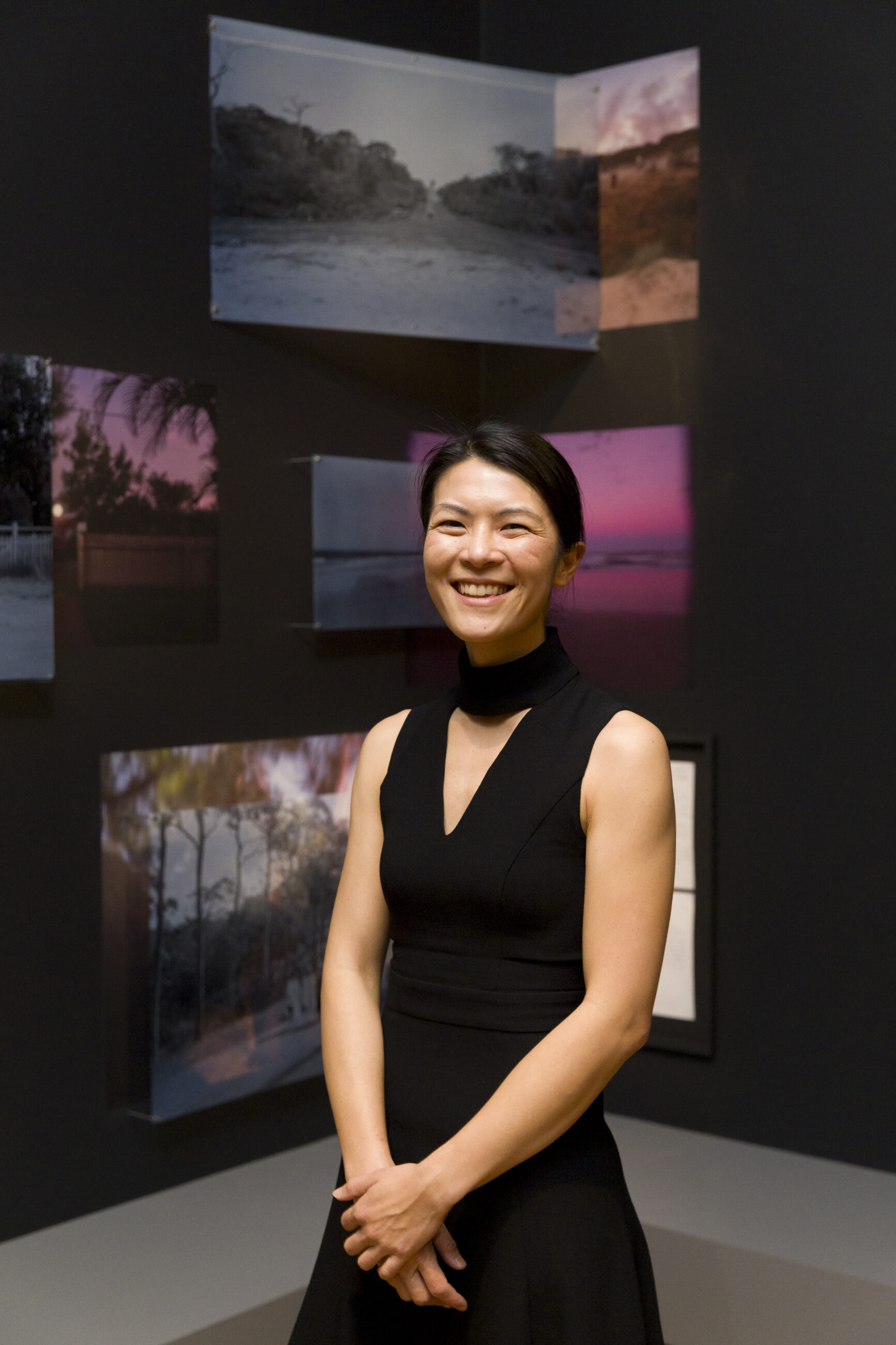
Tammy Law’s reflective and evocative works explore stories of migration, home and belonging. Spanning photography and bookmaking, her practice draws on her lived experiences as a Chinese-Australian woman, raised on the Sunshine Coast and based in Brisbane.
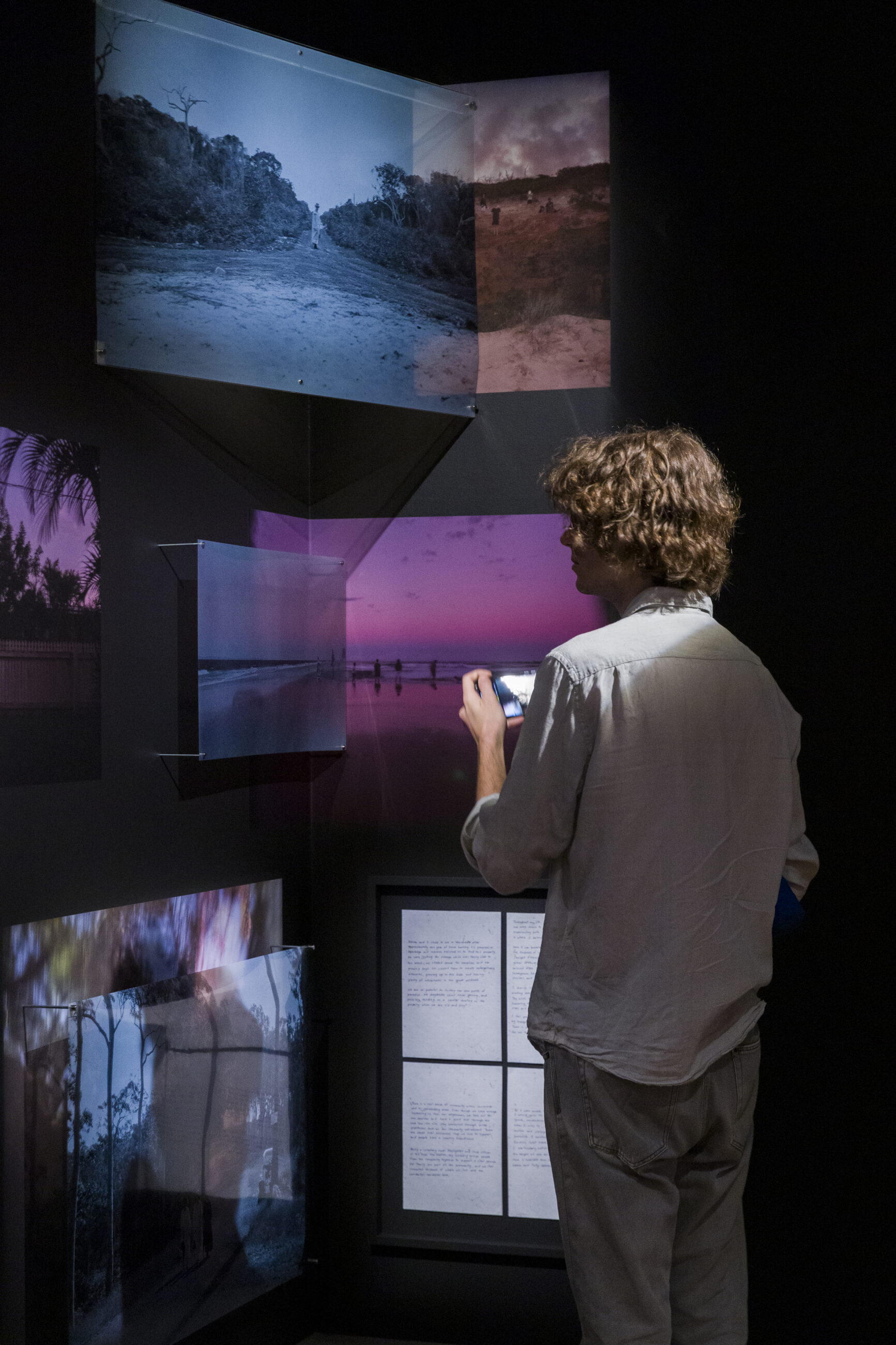
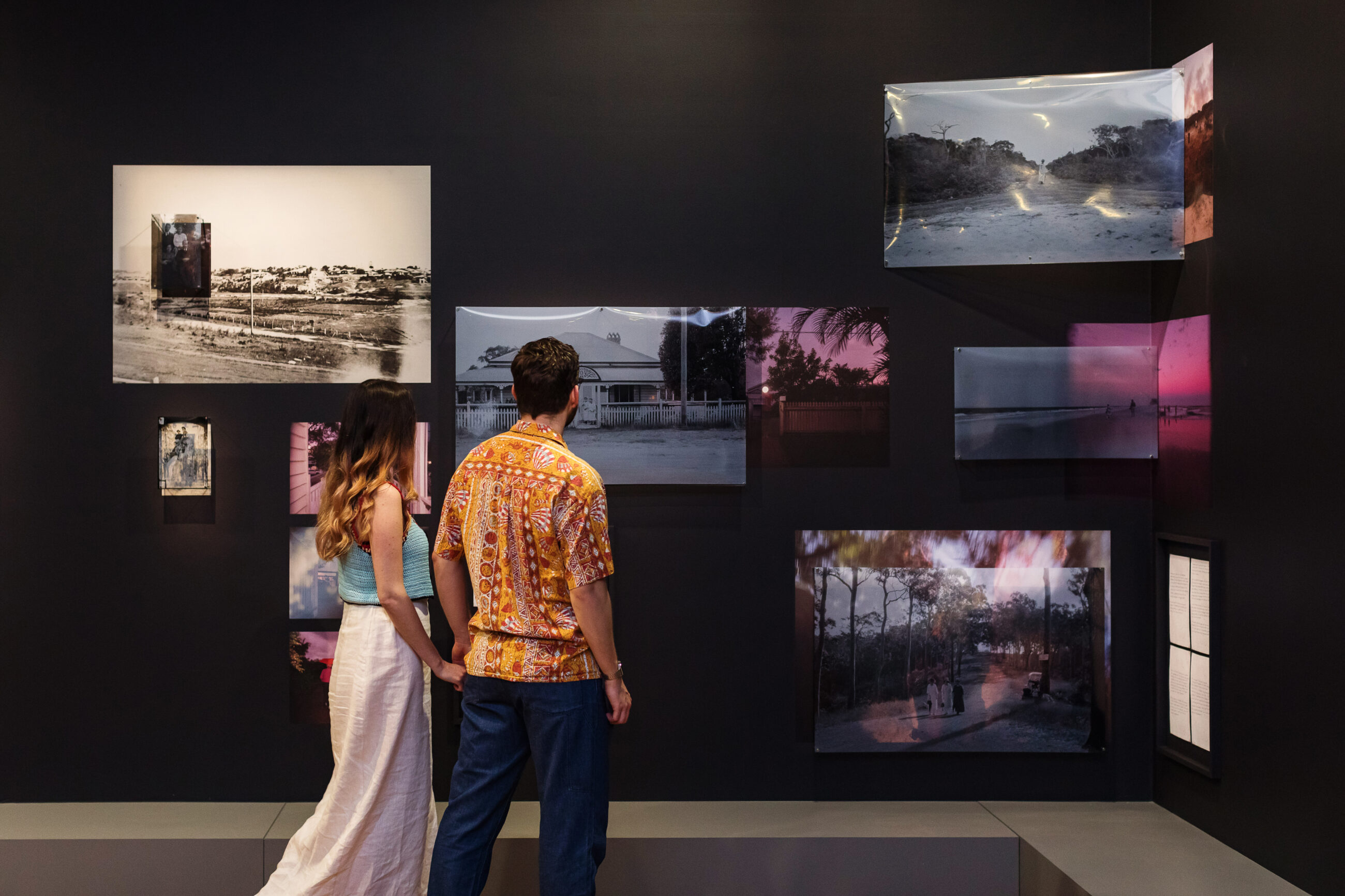
As part of New Light: Photograph Now + Then, Tammy created We were thought to be mysterious and alien…, a response to the Elliott Collection that reflects on visibility and the gaps in historical narratives.
We spoke with Tammy about her artistic journey, the role of photography in her practice, and the stories that shape her work.
Can you introduce your practice and your ongoing interest in migration stories and ideas of home and belonging?
I am an Asian-Australian visual artist working across photography, photobook-making, and community-engaged projects. My practice is rooted in exploring migration stories—both personal and collective—as a way to reflect on shifting ideas of home and belonging. As someone who moves between cultures, I’m interested in how identity is shaped by place, memory, and movement. Photography allows me to trace these narratives visually, creating space for quieter, more intimate reflections on what it means to live between worlds. My ongoing work often engages with communities, layering perspectives on transnational life, dislocation, and the search for connection across borders.
What does photography as a medium allow you to explore that other art forms might not?
Photography offers a unique immediacy and intimacy—it captures both presence and absence in a way that feels deeply connected to memory and time. For me, it’s a medium that allows quiet, often overlooked moments to hold significance. When exploring themes like migration, home, and belonging, photography becomes a way to document the in-between spaces—what is left unsaid, what is or isn’t remembered, and what is felt but not always visible. Unlike more constructed or abstract forms, photography allows me to work with real people, places, and textures, while still leaving room for ambiguity and interpretation. It’s that tension—between the documentary and the poetic—that draws me in.
What aspect of the Elliott Collection do you find most interesting?
What draws me most to the Elliott Collection is its ability to capture the everyday with an honesty that feels both personal but also how it could resonate with so many. So much of the collection felt familiar and alien at the same time. That duality—of recognition and estrangement—speaks to my own experience as a Chinese-Australian living and working in Brisbane, and it prompted a reflection on the types of histories that are preserved, remembered, or overlooked.
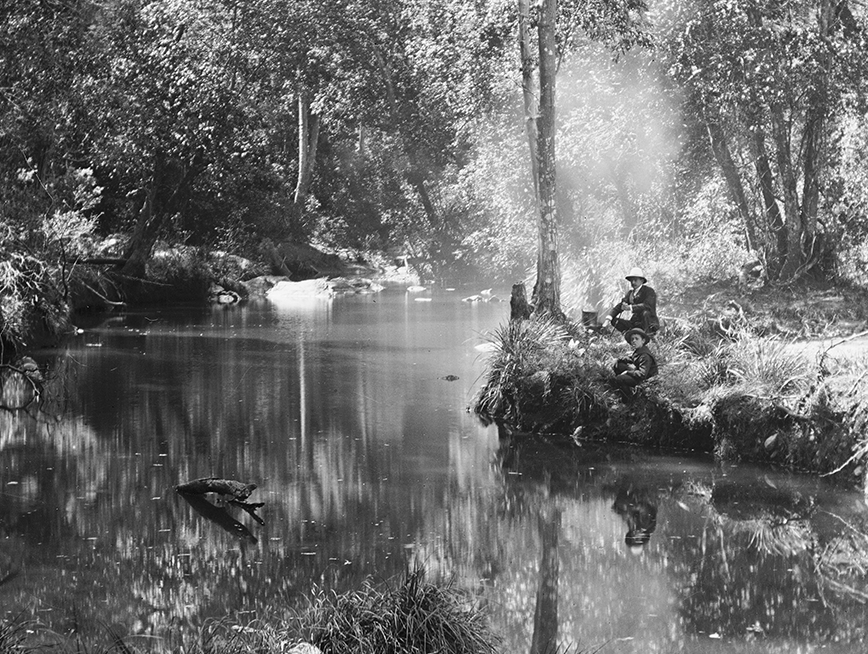
I’m especially interested in the way Elliott’s images offer a lens into a particular vision of Queensland life—often centred on settler experience—and how that vision might sit in contrast to the stories of migrant families like my own. Having traversed many of the same landscapes as Elliott over the past 21 years, I see this collection not just as a record of place and time, but as a moment for reimagining the histories that exist alongside and beyond the frames.

Can you tell us about your new work responding to the Elliott Collection, We were thought to be mysterious and alien…?
We were thought to be mysterious and alien… is a photographic response that reflects on visibility, memory, and belonging—particularly through the lens of Chinese-Australian histories in Queensland. I’m juxtaposing Elliott’s photographs with archival images of early Chinese migrants and portraits of my family. This allows me to explore the parallels, and absences that shape our collective memory of Brisbane. The works become a space of reflection – on who gets seen, who remains invisible, and how we belong.
The work creates a dialogue across time: contrasting the dominant narratives captured through Alfred Elliott’s camera with the lesser-seen stories of people like my parents, who migrated to Australia nearly 50 years ago. As someone raised on the Sunshine Coast and now based in Brisbane for over two decades, I’ve walked and photographed many of the same spaces Elliott did. Yet our experiences of those landscapes are shaped by vastly different social and cultural contexts. This work seeks to explore those intersections and absences—what is remembered, what is forgotten, and how personal and collective histories intertwine.
The title itself—We were thought to be mysterious and alien…—echoes the language historically used to describe Chinese migrants in Australia, and draws attention to the ways racialised narratives have shaped belonging. Through this work, I hope to gently challenge those narratives, while also finding points of connection and common ground.

What do you hope people will take away or reflect on when they experience your work in New Light: Photography Now + Then?
I hope viewers are prompted to reflect on the multiplicity of stories that exist within any given place—and how easily some of those stories are silenced or overlooked. I want to create a space where alternative narratives of Queensland’s past can surface—ones that challenge the dominant, often Eurocentric representations of Australian history. My work invites reflection on how migration, memory, and belonging shape our sense of identity and place. I’m particularly interested in how photography can both reveal and obscure, depending on who holds the camera and whose stories are being told. By revisiting familiar landscapes through a different lens, I hope audiences will consider how history is constructed, and who is included or excluded from that framing. Ultimately, I’d like people to walk away with a deeper curiosity—about the hidden histories that live alongside the familiar, and about the power of personal storytelling to reshape collective memory.

Discover more about New Light: Photography Now + Then