
Gerwyn Davies is a nationally recognised artist whose practice skilfully combines costume-making and photography. He stages elaborate self-portraits, donning extravagant costumes against surreal backdrops, that employ camp aesthetics to disrupt dominant modes of representation. Currently based in Sydney, Gerwyn frequently returns to Queensland, where his journey began.
Gerwyn was born about 40 kilometres southwest of Brisbane in Ipswich, which he describes as the “family hub”. His mother and grandmother grew up in Ipswich, with the latter still living there. As a self-professed “army brat”, he spent much of his childhood roaming the country as the family moved from place to place. The longest stint was in Darwin, where he completed his primary schooling. He recalls being creative in the way of most children, sharing anecdotes of choreographing routines on rollerblades and pretending to be a Romanian gymnast. In his teenage years, Gerwyn returned to South-East Queensland to attend high school in Toowoomba. Soon after, he moved to Brisbane to study a Bachelor of Creative Industries at Queensland University of Technology (QUT).
Unsure of what he wanted to do, Gerwyn jumped back and forth between subjects. His primary focus was journalism, but he also spent a lot of time in the cinema and sound departments. He shares, “The whole time I was at QUT, I was so jealous of the fine art kids, the fashion kids”. In his mid-20s, Gerwyn found himself feeling restless after returning from a period of overseas travel. He was also practising photography, rather informally, and finding great joy in it. Every Friday night, he would gather with his friends at a share house, drink wine, eat takeaway and do photoshoots:
“It just became this really fun, playful exercise… we would come up with a character and there would be costuming and makeup, and someone would stand in as the model or we’d invite someone over who’d have to do it for us, and we’d scrounge around the house pulling out lights, moving them around, creating this scene”.
Through these shoots, Gerwyn’s interest in photography solidified. Looking to gain a better handle on technique, he enrolled in a Bachelor of Photography at Queensland College of Art (QCA). He describes his time at QCA as “heaven”, explaining, “It was such a nice art school experience, it was really collegial, everyone was really focused and driven”. Although students were only allowed to have one major, Gerwyn convinced the college to let him have two: Fine Art and Creative Advertising. Both disciplines supported him in developing his practice. At first, he was drawn to photographing small dioramas, made by running paper through a sewing machine. This evolved into shooting large soft sculptures. Although his work looked different to what it does now, Gerwyn’s intent was the same: to use the camera as a tool to fabricate narratives, to conjure fantasy.
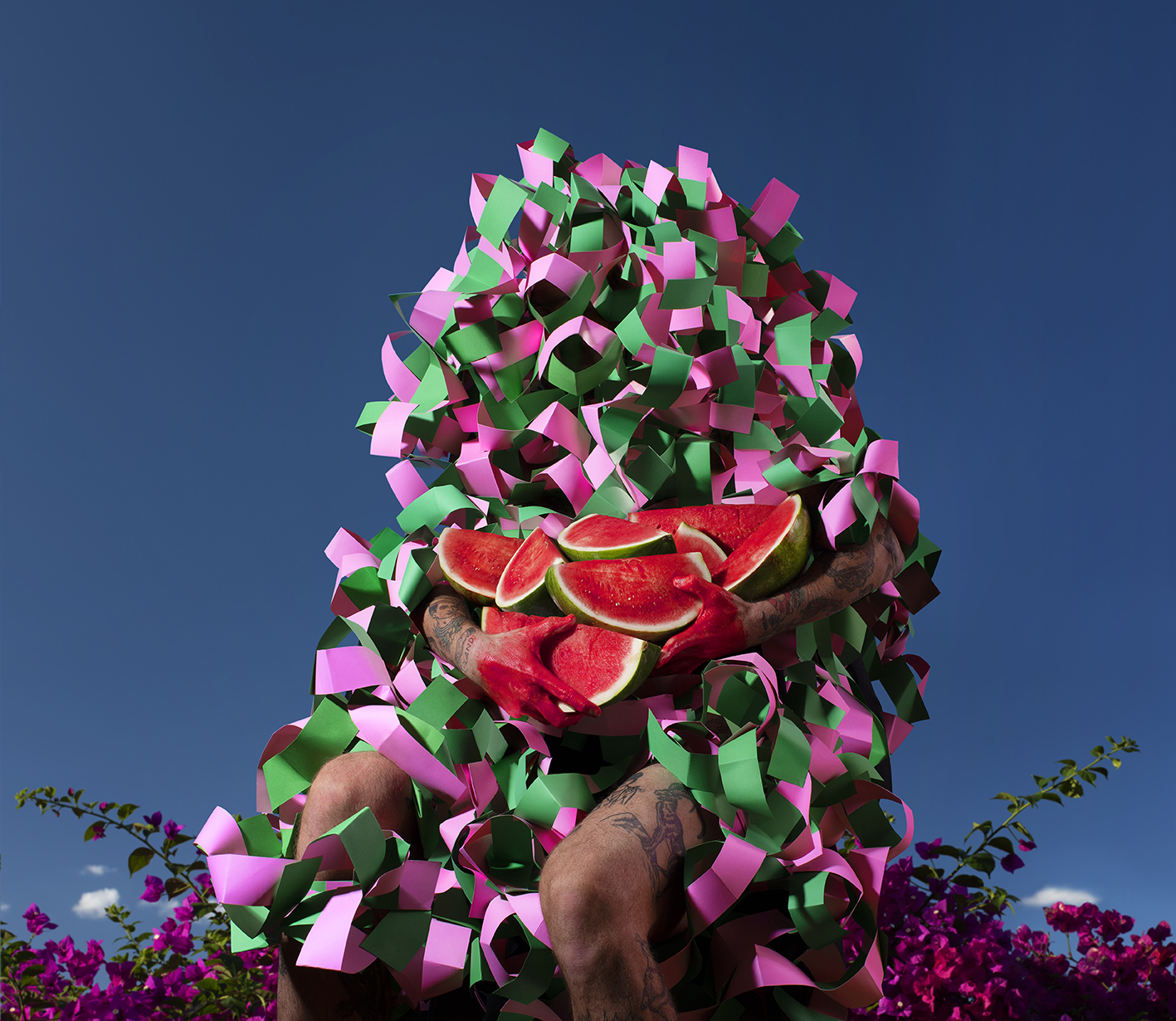
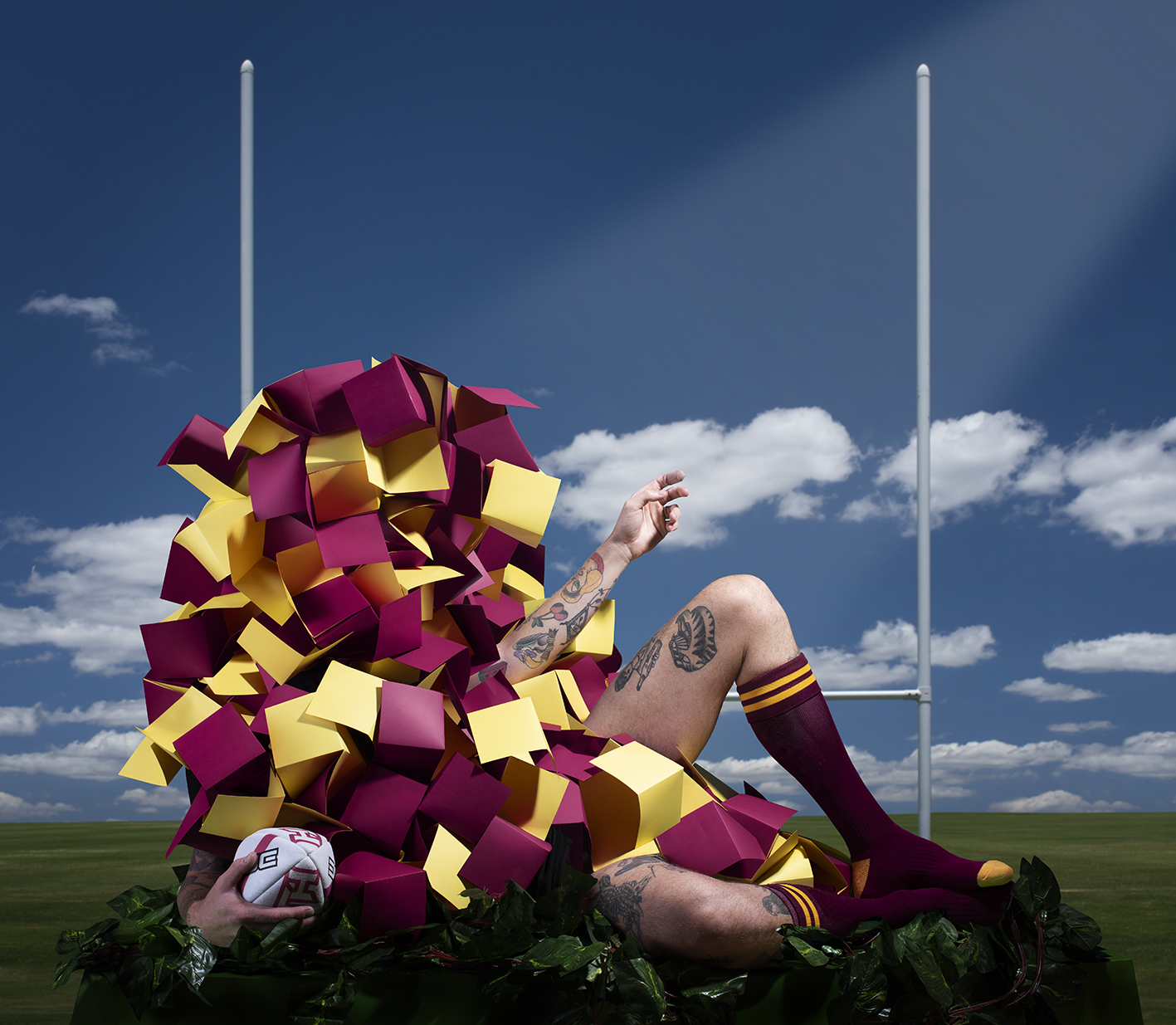
Eventually, Gerwyn began creating the elaborate self-portraits for which he is now recognised. Drawing on everyday objects, he builds outlandish costumes that simultaneously conceal, adorn and transform the body. Embracing materials that are tawdry and synthetic, that shimmer and shine, his outfits both accentuate and disguise the body. In Croc (2025), for example, lurid green inflatable crocodiles envelop the artist from the torso up, obscuring all discernible features, except for his tattooed arms and legs. Similarly, in Roadrunner (2024), shards of gold upholstery cascade down his back, both augmenting and obliterating the shape of his body. In front of the camera, Gerwyn becomes hyper-visible, but also unidentifiable – a challenge to normative visibility.
His self-portraits also feature stylised backdrops that complement, and in many cases extend, his costumes. Some of the backgrounds resemble the real world, while others are completely fabricated. Through postproduction, Gerwyn reduces the depth in his works, flattening their pictorial space. He explains, “I want the works to look plastic, shiny and fake – as if there’s a veneer to them”. In doing so, he alerts viewers to the fact that they are engaged in a performance, a façade.
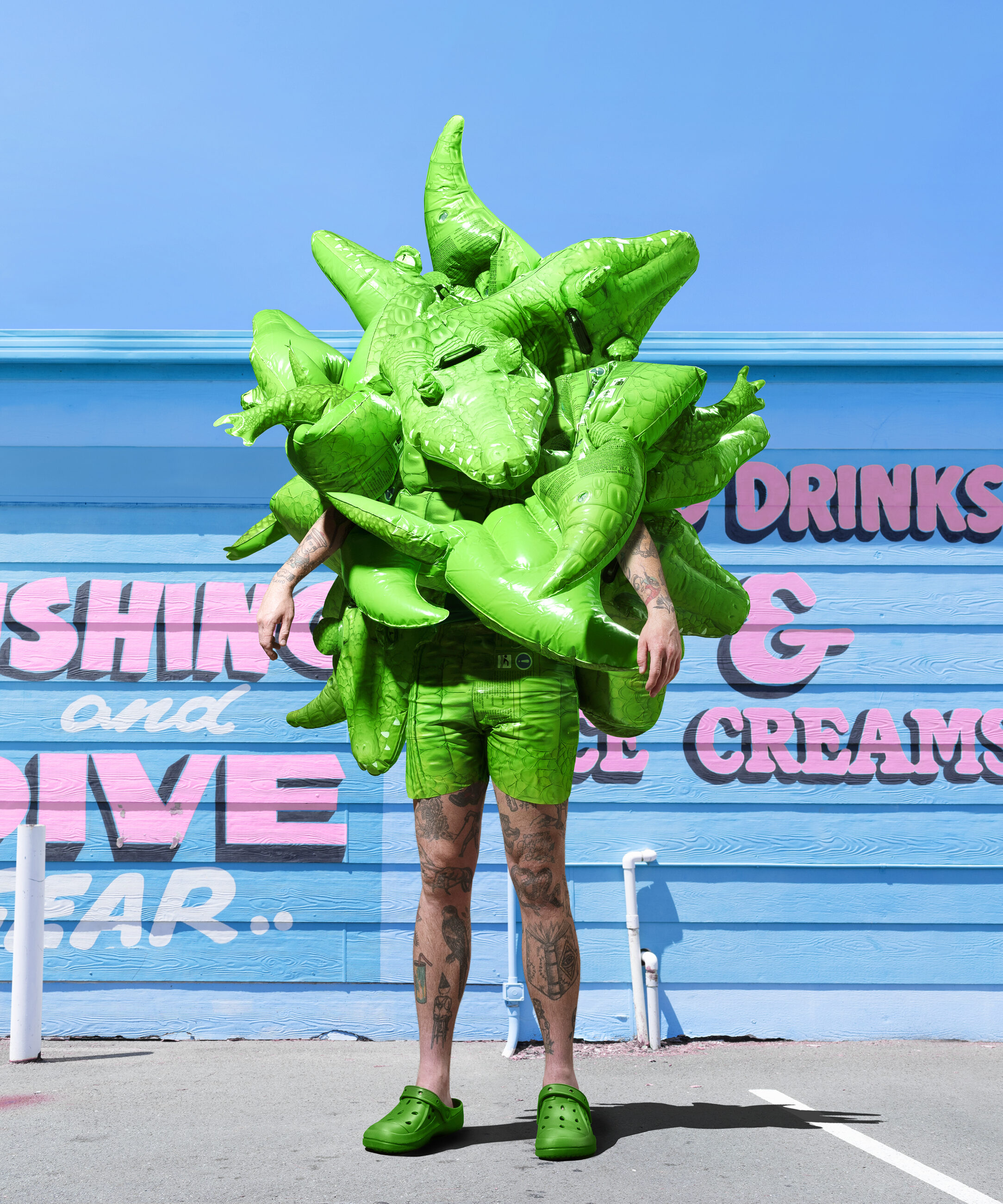
Gerwyn’s work is a prime example of camp, with its focus on sheen, excess and artifice. What makes it truly camp, however, is its embrace of incongruity and ambiguity. Gerwyn elucidates:
“The political engine of camp is its ability to be evasive. If you go back to its origins it’s talked about as a way of communicating between queer subjectivities, as a secret code, a way of connecting through language and gesture without being identified as queer and then targeted. It was a survival strategy. It’s very political, it was born out of politics. It is innately queer and is about survival”.
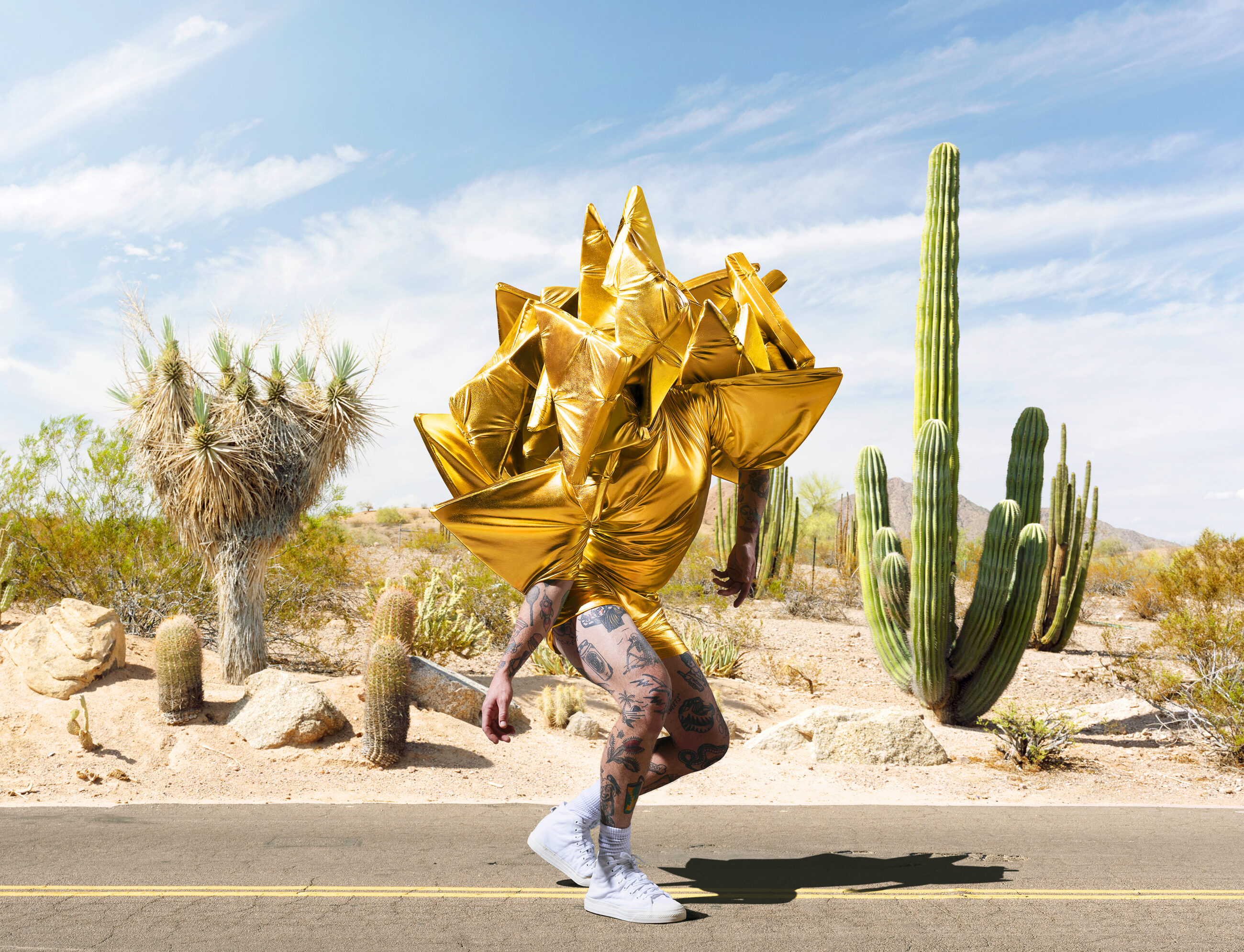
In all of Gerwyn’s self-portraits, there is a tension between what is seen and what is hidden, what is real and what is fake, what is trivial and what is earnest. While his works are extremely alluring, there is a discomfort in not being able to place what is actually happening in them. This irresolvable friction, this charged slipperiness, is what, in the artist’s words, “makes them campy”.
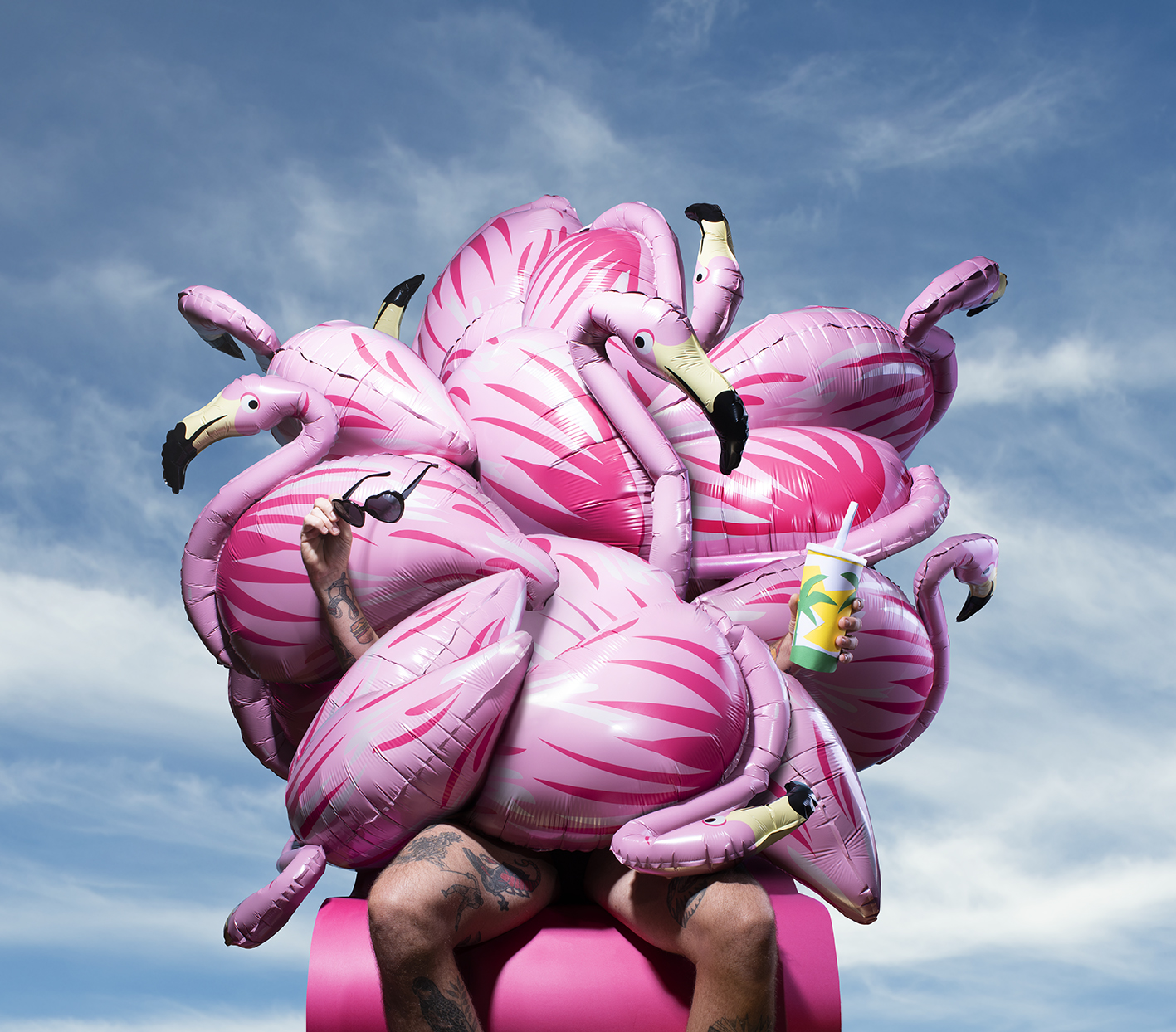
In 2018, Museum of Brisbane acquired a work of Gerwyn’s that embodies his camp approach. In Flamingo (2018), the artist is overwhelmed by bright pink inflatable flamingos. Holding heart-shaped sunglasses in one hand and a cold cup in the other, he sinks into a chair that appears to levitate in the sky. While the work draws in viewers through flashy materials and a vibrant palette, it leaves one feeling slightly unsettled – is the artist in control or being smothered, a human or an object?
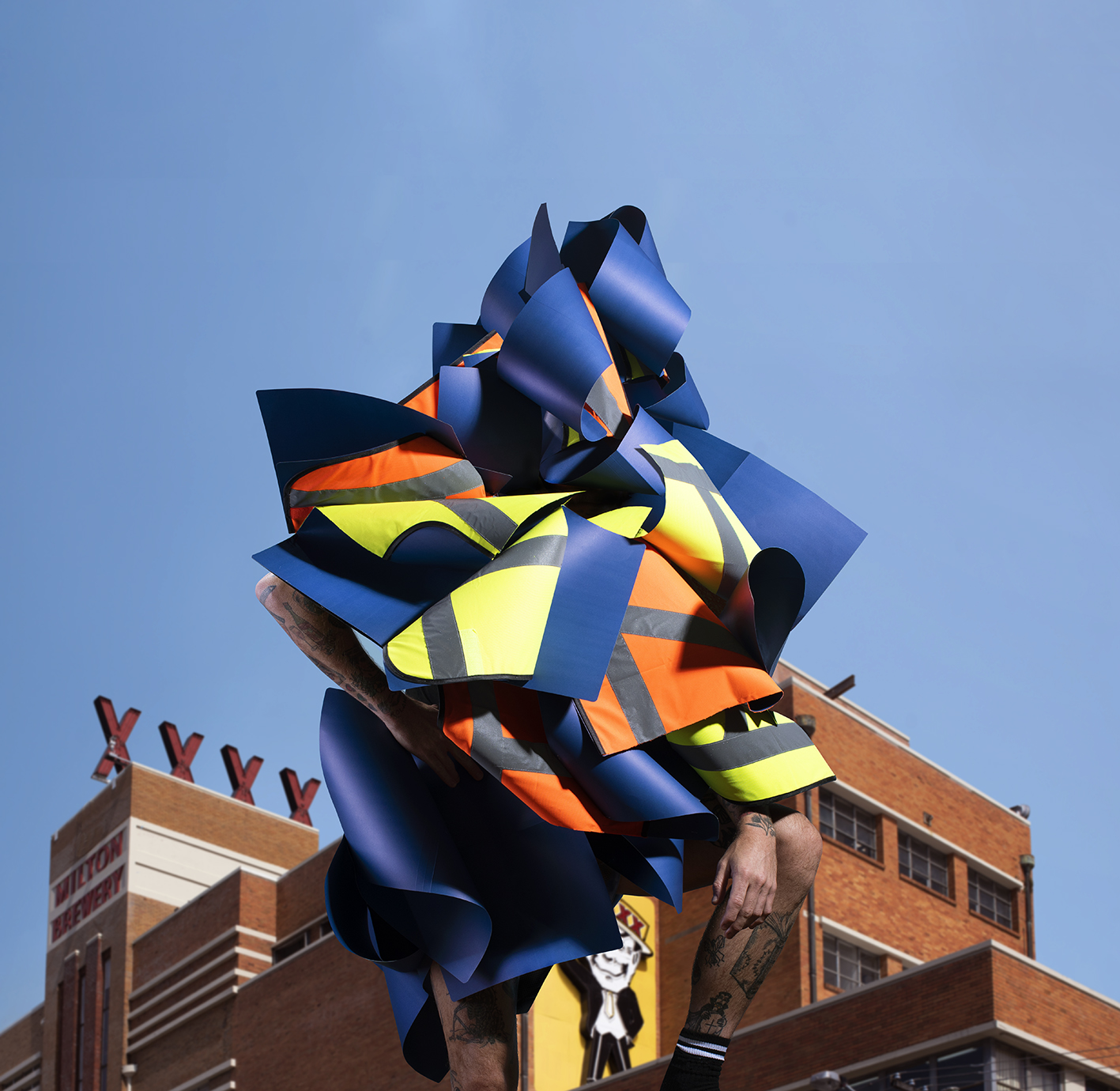
Taking on the role of facilitator, as opposed to artist, was a new experience for Gerwyn, at least in the context of his practice. It was important to him not to dictate the young people’s creativity, stating, “I had to make sure it was truly collaborative and that I wasn’t being a control freak”.
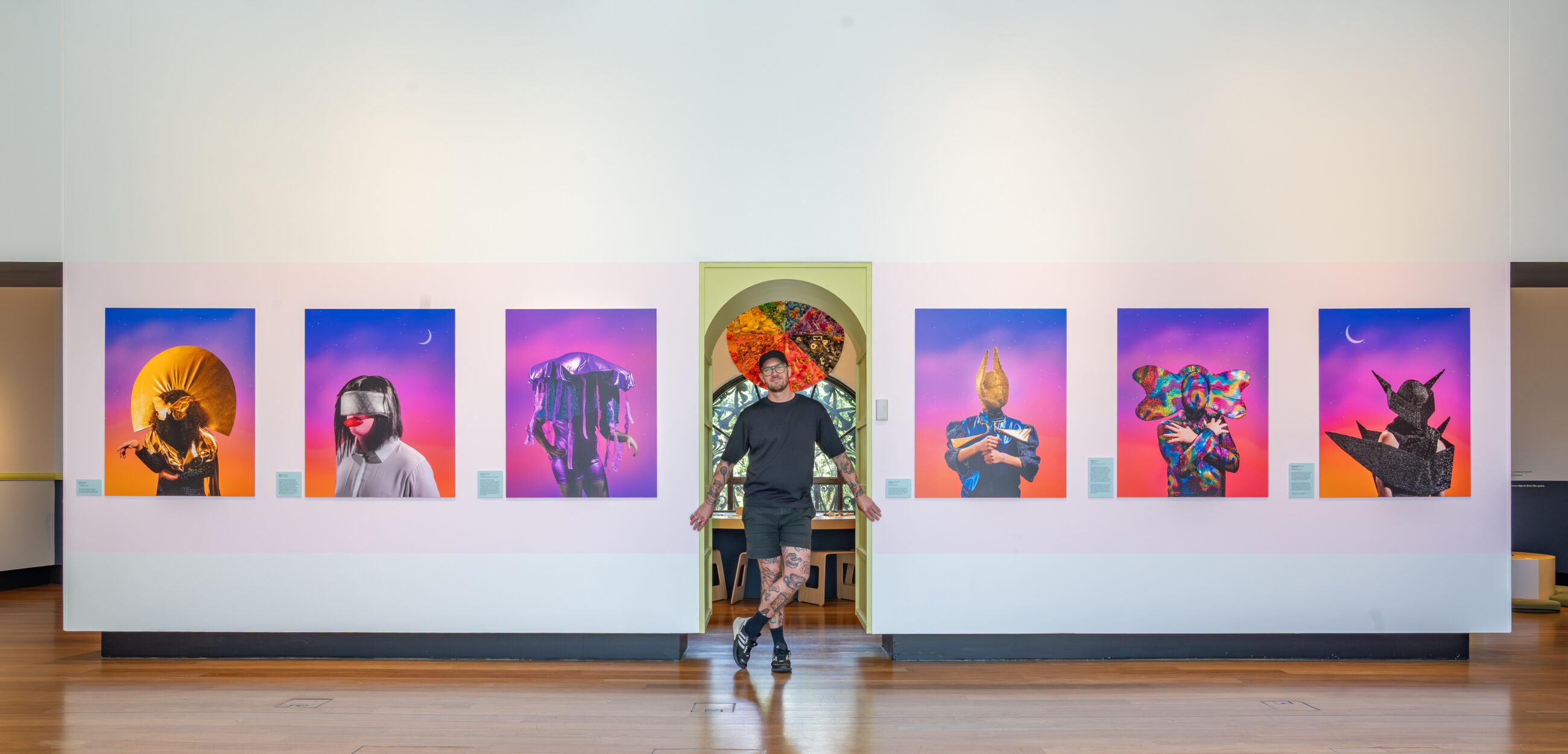
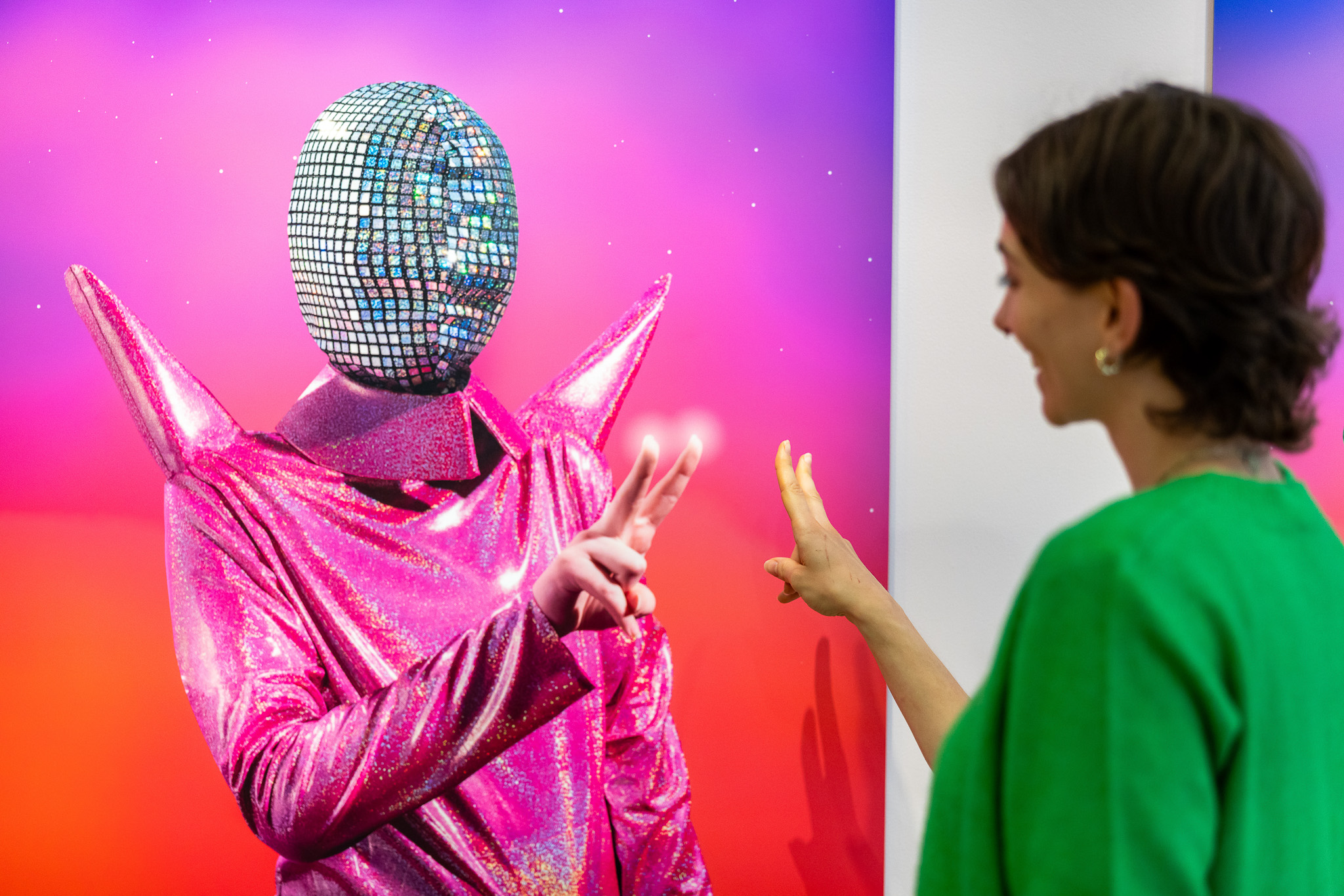
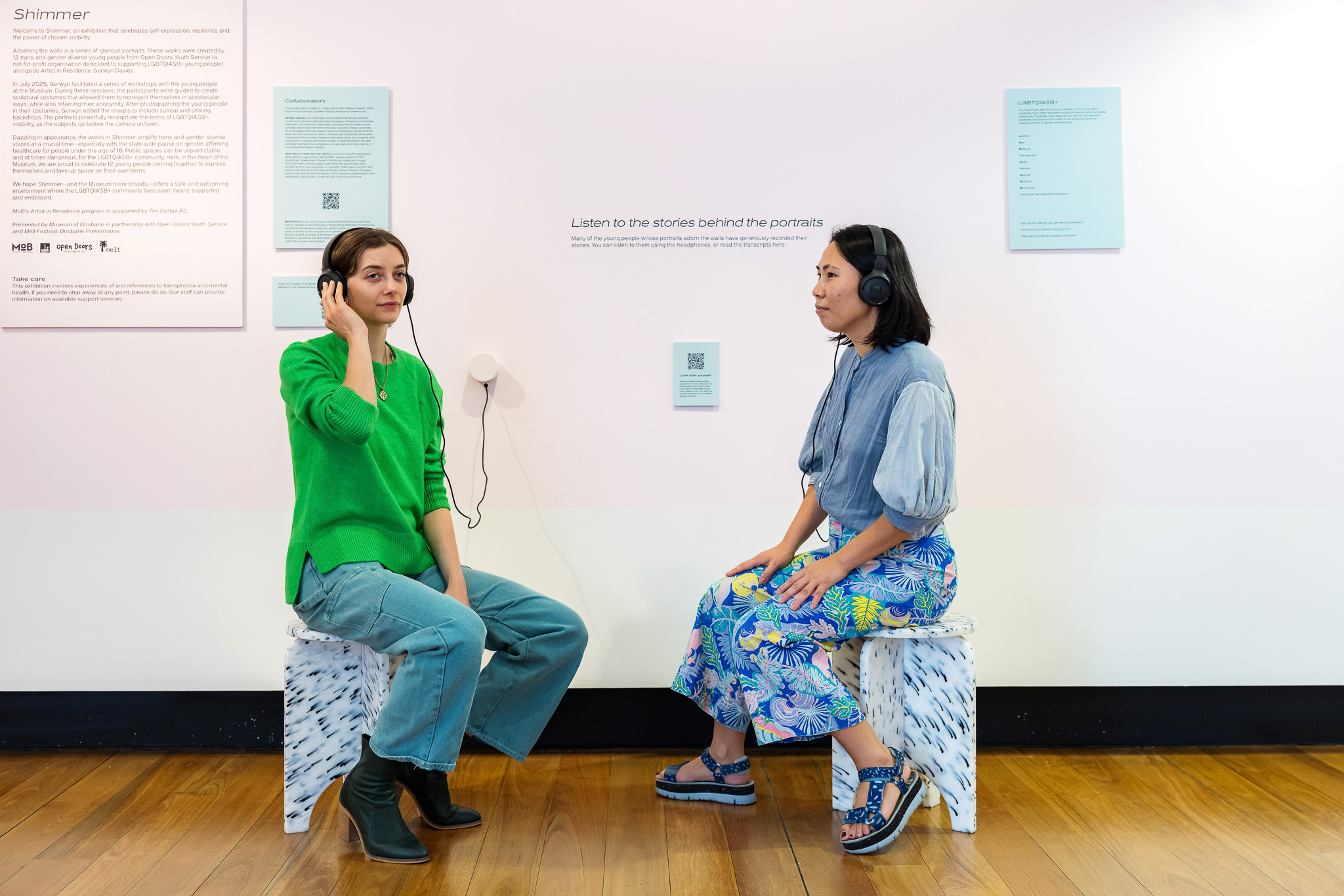
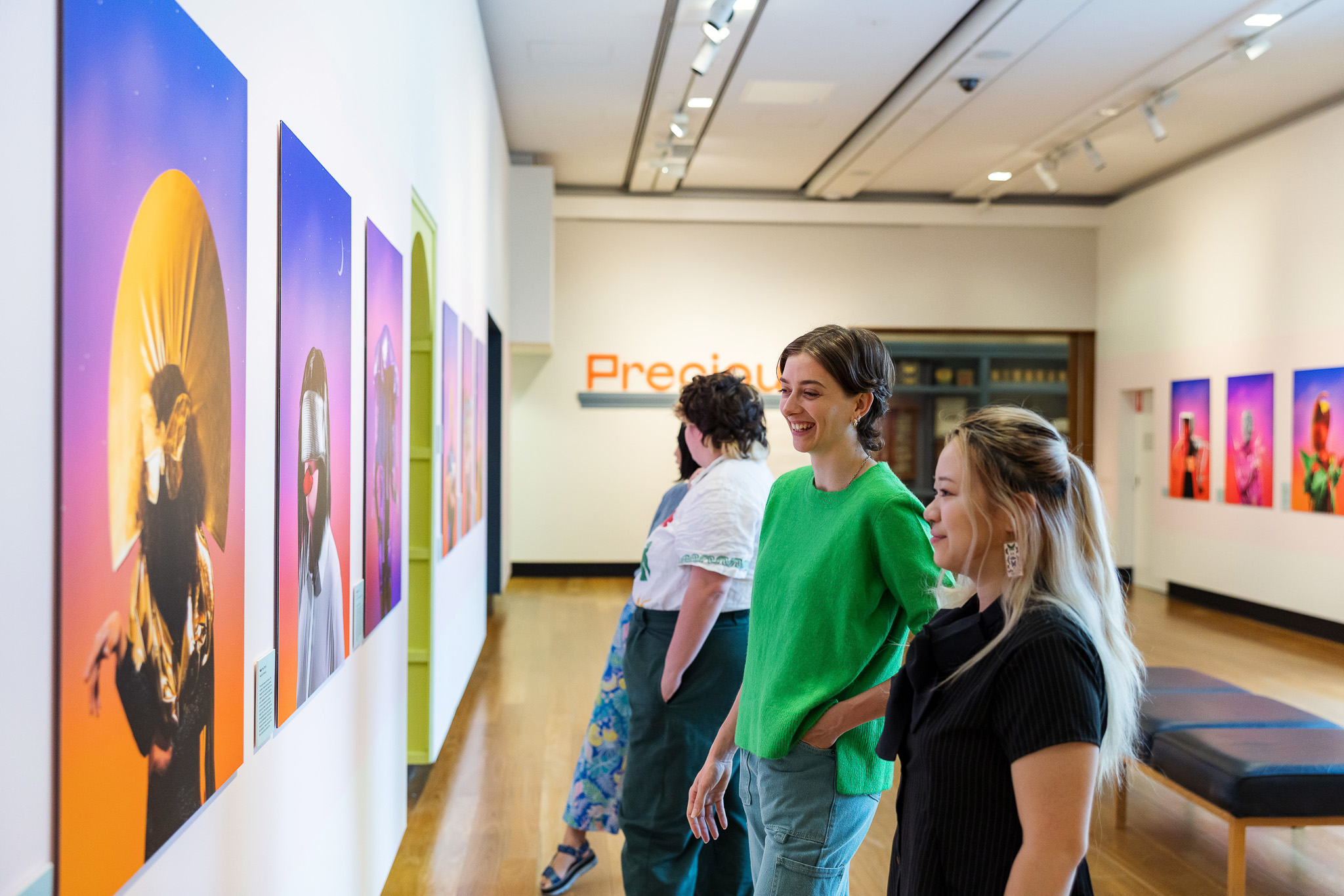
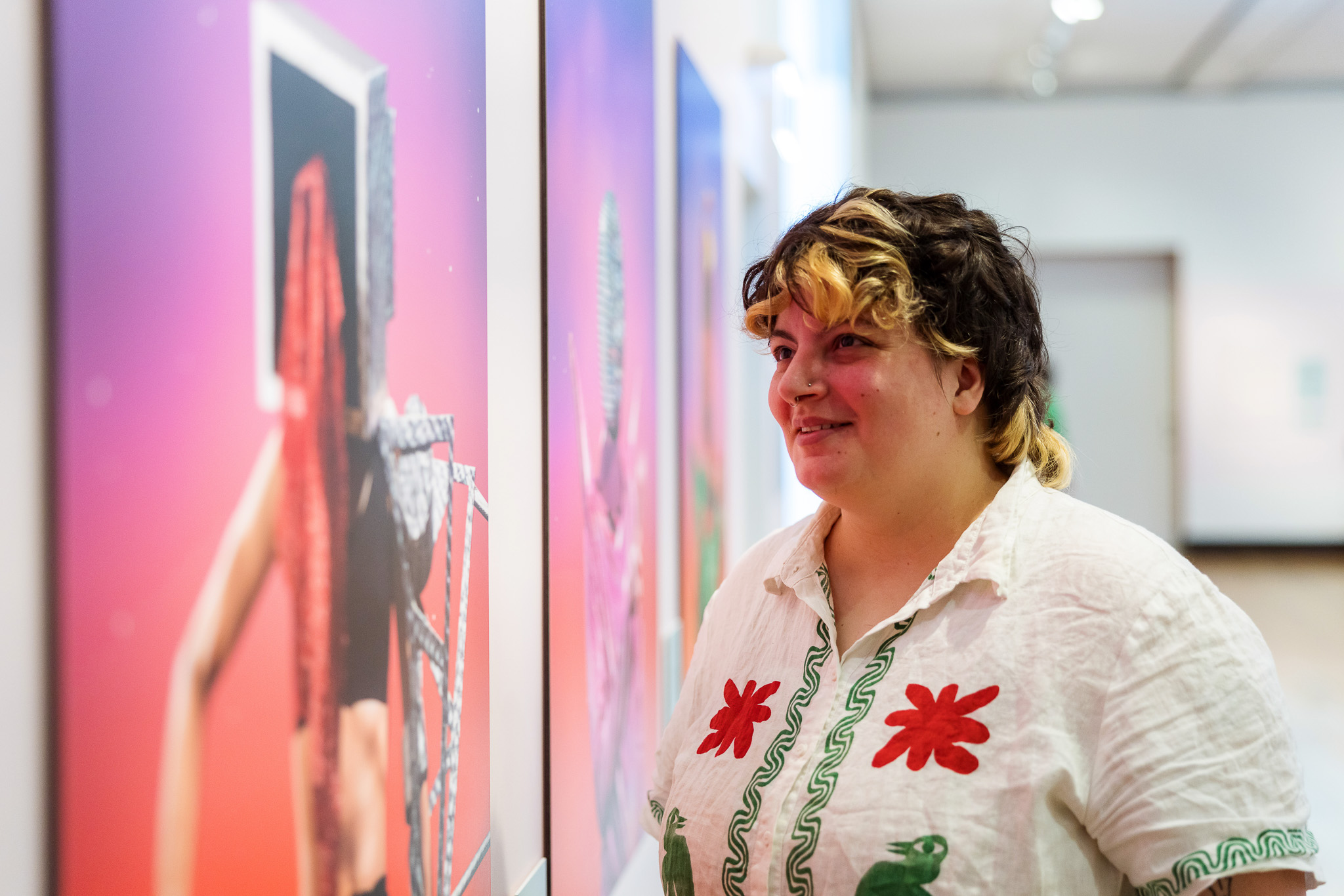
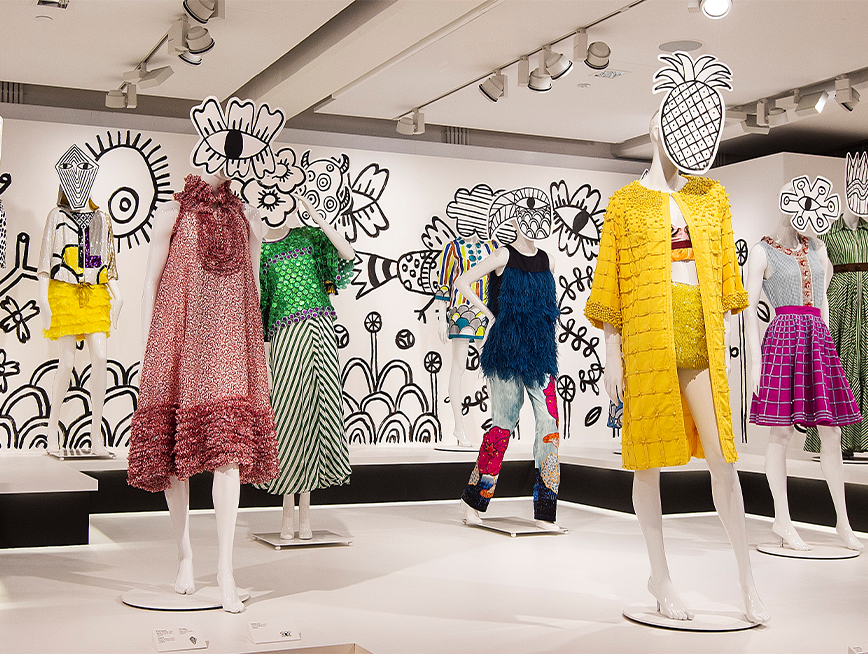
After photographing the young people in their costumes, Gerwyn edited the images to include surreal and striking backdrops. The resulting works powerfully renegotiate the terms of LGBTQIASB+ visibility and form the exhibition Shimmer, currently on display in the heart of the Museum.
When asked what he wants people to take away from Shimmer, Gerwyn shares:
“My ultimate goal is for people to be mesmerised by the photographs and constructions these young people have made, then listen to the stories and walk away more informed and a little less hostile or quick to jump at opinions on things that they don’t have a connection to. I want people to understand that these are fellow citizens, really beautiful people, that aren’t asking for anything other than to live their lives as themselves, to be safe to go to school or to work or even to the bathroom. They’re not asking anything of anyone else, they’re just asking for agency over their own lives”.
Shimmer will continue to shine until 19 April 2026. In the meantime, Gerwyn is keeping busy, shooting a new body of work in Shanghai and finalising his upcoming solo exhibition at Tweed Regional Gallery. With his ties to Queensland continuing to strengthen, who knows what future collaborations may develop. But one thing is for certain: a return visit is surely on the cards.
Written by Elena Dias-Jayasinha, Curator, Museum of Brisbane.